Good News for Farming Can Be Bad News for Farmers Because the
As humanity grows larger, infinite keeps becoming an issue. So, things are becoming more and more vertical like houses, interior design, and garden. But we're beginning to accept the larger version of garden; farms. While field and greenhouse takes infinite, this alternative saves it.
Vertical farms are plants stacked in layers, which are usually integrated into other building like a shipping container, skyscraper and warehouse. Vertical farms will produce food as the conventional ones.
And since information technology uses Controlled Environment Agriculture engineering science, it doesn't need to rely so much on sun and weather. At that place'll be no worry well-nigh temperature, humidity or moisture, gas, and lite to abound food or medicine; the climate inside the farm is well-regulated.
The main goal of vertical farming is to produce more crops in a express space. In that location needs to exist towers filled with cultivated crops, as well every bit great fusion of natural and bogus lights to maintain the perfect light level in the room. To better amend the lighting efficiency, rotating beds engineering is sometimes as well used.
Peat moss, coconut husks, and other non-soil mediums are more mutual than aeroponic and hydroponic. To brand it more sustainable and conservable, this kind of farming uses features to get-go energy cost of farming. I of the results? It uses up to 95% less water.
One case of the vertical farming is a company chosen Enough. They want to take a vertical farm where they'll abound pesticide-gratuitous produce with high quality for regional consumers. The crops grow in 600 cm alpine towers in LED-lighted facility. They won't exist using synthetic fertilizers and herbicides, besides. Instead, they'll use infrared cameras and sensors to collect data and optimize the farming from there.
Plenty claims that they tin produce 350 times greater than traditional agriculture by only using 1% water and little to no soil. Such strong merits sounds very promising that Jeff Bezos, Amazon CEO, has invested in the company. Aside of Bezos, SoftBank, Louis Bacon, DCM Ventures, and Finistere Ventures have joined to fund the visitor.
(Read too: Green tech startups to inspire your green business)
How vertical farms are great
So this type of farming is favorable to both consumer and producer. Other than that, it can potentially reduce all that space issues or fifty-fifty deforestation in the future. In short, vertical farms could be humanity's future and trouble solver. Here's why.
Countless source of food in smaller places
It's predicted that past 2050, 80% of earth population will live in urban areas, and the growing number means increasing demand for food. Conventional, traditional methods of farming won't be effective to meet the need, and then the new type of farming will play a meaning function to to prepare that kind of problem.
With vertical farming, you can go 4 to 6 acres of production capacity in only 1 acre. When it's roughly calculated, a 30 storey building of 5 acres can produce an equivalent of ii.400 acres of horizontal farming. Besides, you tin can continuously grow your crops all twelvemonth round because the facilities are climate-controlled by advanced technology.
Conservation at its all-time

As mentioned before, vertical farming saves a lot of water. Vertical farmers can grow crops with 70 to 95% less water than the required corporeality for normal cultivation. Of course, conventional farmers have some means to conserve water such every bit drip irrigation, rotational grazing, and crops roofing among other things. The conservation amount and results, however, won't be every bit favorable.
Bad weather will be a thing of the past

Crop quality and institute health are very important when it comes to farming. Something goes incorrect and you lot're gonna accept a bad fourth dimension when it's time to harvest. Crops can hands be affected past natural crisis like cyclones, flood, or severe droughts.
Since global warming has worsen that upwards, moving those plants indoor volition significantly mitigate unwanted consequences. Farmers will likewise take a not bad certainty of harvest throughout the twelvemonth.
More than organic stuff coming our way

Organic things are so nice. Yet, not every part of the globe tin can enjoy this advantage. Some take to pay a lot more considering of aircraft costs, and information technology's not exactly eco-friendly because there are more than carbon footprints from the transportation.
If there are more and more vertical farmers, surely that won't happen too often. We tin can enjoy healthier food and lifestyles. Vertical farming doesn't use chemical pesticides, which tin can cause chemic pollution to h2o, soil, and air. When farmers don't use it, we'll be free of health risks and the environs volition exist happier.
Less occupational hazards
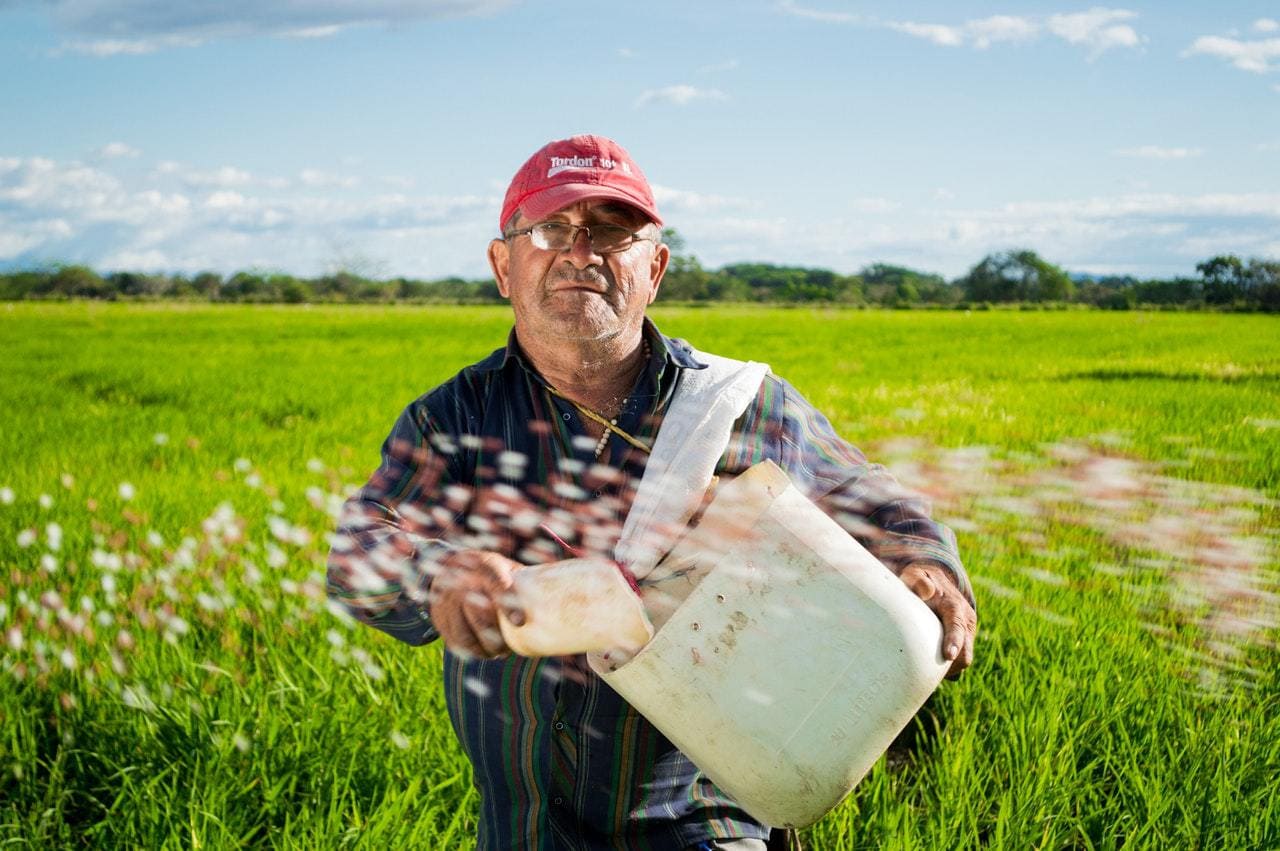
Did y'all know that traditional farmers are frequently exposed to hazards? They piece of work around areas and items which tin potentially give them diseases similar malaria and accidents because of their heavy farming equipment. Poisonous chemicals within the farming area are also high-risk to them, too. With indoor vertical farming, they won't have to exist in abiding danger.
How vertical farms are not that great
However, no gift comes without a toll. Fifty-fifty though vertical farming sounds really promising and beneficial to humans and Globe, there are some limitations as well.
Pollination will be difficult

Bugs or insects are neat helpers to the success of growing crops in farms. But vertical farming exclude them completely from the process, so it's done manually. And and so far, manual pollination is costly and requires a large workforce, which is not the almost efficient method to date. The workers will also accept to reach each layer, which decrease employee efficiency.
No certain feasibility
Building towers for farming, installing lighting, heating, and other technology gadgets, and labor costs are larger than the benefits received from vertical farming. Edifice price can be upwardly to $100 million. This new class of farming also demand highly skilled workers. The hourly cost of these workers are way higher than the ones in the conventional agriculture. Companies will have to pay a lot more.
Technology-dependent
Technology is great because it helps united states in many ways, such as increment efficiency and aid us get things done finer. Vertical farms, however, are extremely dependent on them. When those farms lose ability for a unmarried day, companies will accept a bad twenty-four hour period. Also, this will create fewer jobs because of high-tech gadgets and automation.
All in all, vertical farms accept their strength and weaknesses, but it doesn't hateful that this blazon of farms can't be refined to exist ameliorate. It's a relatively new technology, after all, and there's still time to perfect information technology.
Only what'due south your have on this applied science? Nosotros'd love to hear your thoughts, so share them in the comments below. If yous similar this blazon of reading, brand certain to check this article virtually other engineering science which will aid Mother Earth and human in the future.
Source(s):
https://www.forbes.com/sites/ronaldholden/2017/eleven/04/its-called-vertical-farming-and-it-could-be-the-hereafter-of-agriculture/#41370a511175
https://world wide web.thebalance.com/what-you-should-know-about-vertical-farming-4144786
Source: https://earthbuddies.net/vertical-farming/
0 Response to "Good News for Farming Can Be Bad News for Farmers Because the"
Post a Comment